
If you own a home in Maine, you’ve probably heard the term “forever chemicals” by now. But what you may not realize is just how fast the regulatory landscape around PFAS — per- and polyfluoroalkyl substances — is shifting, and how directly it affects your drinking water, your property value, and your family’s health.
Maine has emerged as one of the most aggressive states in the country when it comes to confronting PFAS contamination. New drinking water standards took effect in late 2025. Landlord testing requirements are on the way. And the state’s investigation into contaminated private wells keeps expanding — with over 1,000 sites now identified, far more than the 700 originally estimated.
Here’s what you need to know.
What Are PFAS, and Why Should Maine Residents Care?
PFAS are a group of thousands of synthetic chemicals that have been manufactured and used in consumer and industrial products since the 1940s. They’re found in everything from nonstick cookware and stain-resistant fabrics to firefighting foam and food packaging. The carbon-fluorine bond at the heart of these molecules is one of the strongest in chemistry — which is what makes the chemicals so useful in manufacturing, and so persistent once they enter the environment.
That persistence is exactly the problem. PFAS don’t break down naturally in soil or water, and they accumulate in the human body over time. The EPA’s current research links exposure to certain PFAS with a range of serious health outcomes, including increased risk of kidney, testicular, and prostate cancers; weakened immune response, including reduced effectiveness of vaccines; liver damage and elevated cholesterol; reproductive effects such as decreased fertility and pregnancy complications; and developmental impacts in children, including low birth weight and behavioral changes.
The National Institute of Environmental Health Sciences (NIEHS) has confirmed that PFOA and PFOS — two of the most studied PFAS compounds — suppress antibody response and pose a clear hazard to immune function in humans.
In Maine, the contamination problem has a particular origin story. For decades, municipal sewage sludge was spread on farmland across the state as fertilizer — a common agricultural practice from the 1970s through the 2000s. That sludge carried PFAS into the soil, and from there into groundwater and private wells. The Maine DEP’s ongoing investigation has now identified over 1,066 sites requiring evaluation — more than 50% beyond the original estimate — and more are expected as the investigation continues.
Maine’s New Drinking Water Standards: What Changed
In December 2025, the Maine Center for Disease Control and Prevention adopted tougher drinking water limits that align with rigorous federal standards set by the Biden-era EPA. The key changes include a new cap of 4 parts per trillion (ppt) for PFOA and PFOS individually, which is a dramatic reduction from the previous state standard of 20 ppt for the combined sum of six PFAS compounds. Additional limits of 10 ppt were established for three other PFAS chemicals combined.
To put those numbers in perspective, 4 parts per trillion is roughly equivalent to four drops of water in 20 Olympic-sized swimming pools. These standards reflect growing scientific consensus that even trace amounts of certain PFAS pose health risks with long-term exposure.
The rollout follows a phased timeline. Public water systems must complete monitoring by 2027, with initial enforcement beginning in 2028 and full compliance required by 2029. Systems that exceed the new limits could face penalties of up to $2,000 per day.
State officials have estimated it could cost approximately $50 million to bring all of Maine’s roughly 1,900 public water systems into compliance with the new standards. The state has also identified more than 600 residential wells near former sludge fields, military installations, and industrial sites that tested above the old 20 ppt limit — and that number is expected to roughly double under the stricter standard.
Private Wells: The Unregulated Frontier
Here’s the critical detail that many Maine residents miss: private wells are not regulated under federal or state drinking water laws. The Safe Drinking Water Act applies to public water systems. If you’re one of the roughly half of Maine residents who get their drinking water from a private well, the quality and safety of that water is your responsibility.
The Maine CDC advises homeowners who are concerned about PFAS in their well water to contact a toxicologist to determine if testing is appropriate, or to proactively test using proper sampling protocols and EPA-approved laboratory methods.
The Maine DEP encourages private well owners to sample their own water supply if they follow specific collection procedures and have samples analyzed by a laboratory. Contamination can occur even in wells that aren’t near a known sludge site — research published in Environmental Health Perspectives documented how school septic systems in rural Maine have contaminated neighboring residential wells, suggesting the problem extends well beyond agricultural sources.
Proposed Laws Target Landlords, Sellers, and Rental Properties
Maine’s legislature has been working to expand PFAS testing beyond public water systems, but the key bill has not become law. LD 493 passed both chambers in 2025 and would, if funded and enacted, require landlords of residential buildings with private wells to test their water for PFAS every five years and disclose the results to tenants. The same bill would require residential property owners to disclose water tests showing PFAS contamination when selling. As of this writing it remains on the appropriations table, so none of those requirements are in effect today. Landlords and sellers have no current PFAS testing or disclosure obligation under LD 493, though testing voluntarily is still a reasonable step.
A companion bill, LD 500, added PFAS to the state’s recommended testing list for private wells and proposed free well water testing for low-income residents. Another bill, LD 1326, targets public water systems serving schools, factories, and office buildings, requiring PFAS sampling to begin in January 2026 with defined maximum contaminant levels.
The direction is clear: PFAS testing is rapidly moving from optional to expected — and in many cases, legally required.
What This Means for Real Estate Transactions
If you’re buying or selling a home in Maine — particularly one served by a private well — PFAS testing is quickly becoming a standard part of due diligence.
As a DEP spokesperson advised potential buyers in areas under investigation, it’s wise to ask whether a well has been tested for PFAS and, if not, to include testing as a condition of sale. Some real estate listings in high-concern areas are already including PFAS test results to reassure buyers.
The stakes are real. Homes near contaminated sludge sites or military installations can have PFAS concentrations far above safe levels. And while the state provides filtration systems for wells that exceed standards in areas linked to licensed sludge or septage application, homeowners outside those designated investigation zones are largely on their own.
For real estate agents, home inspectors, and mortgage lenders, PFAS awareness is becoming an essential part of the transaction. Including a water quality test that covers PFAS compounds isn’t just responsible — it protects every party in the deal.
Maine’s PFAS Product Bans: The Bigger Picture
Maine’s response to PFAS goes beyond drinking water. The state has enacted one of the most comprehensive PFAS-in-products laws in the nation. As of January 1, 2026, the following product categories containing intentionally added PFAS are banned from sale in Maine: cookware and nonstick pots and pans; cosmetics and personal care products; cleaning products; textile articles and upholstered furniture; juvenile products; dental floss; menstrual products; and ski wax.
Additional prohibitions are scheduled for 2029 (outdoor apparel for severe wet conditions) and 2032 (nearly all remaining products). Maine joins Minnesota as one of only a handful of states that have included cookware in their PFAS ban.
The state also banned PFAS-containing food packaging effective May 25, 2026, and has required landfills to begin testing leachate for PFAS starting in 2026, with results to be published annually beginning in 2027.
These product bans matter for water quality because they reduce the long-term flow of PFAS into the environment. But for current contamination — the chemicals already in Maine’s groundwater, soil, and well water — testing remains the only way to know your exposure.
How PFAS Water Testing Works
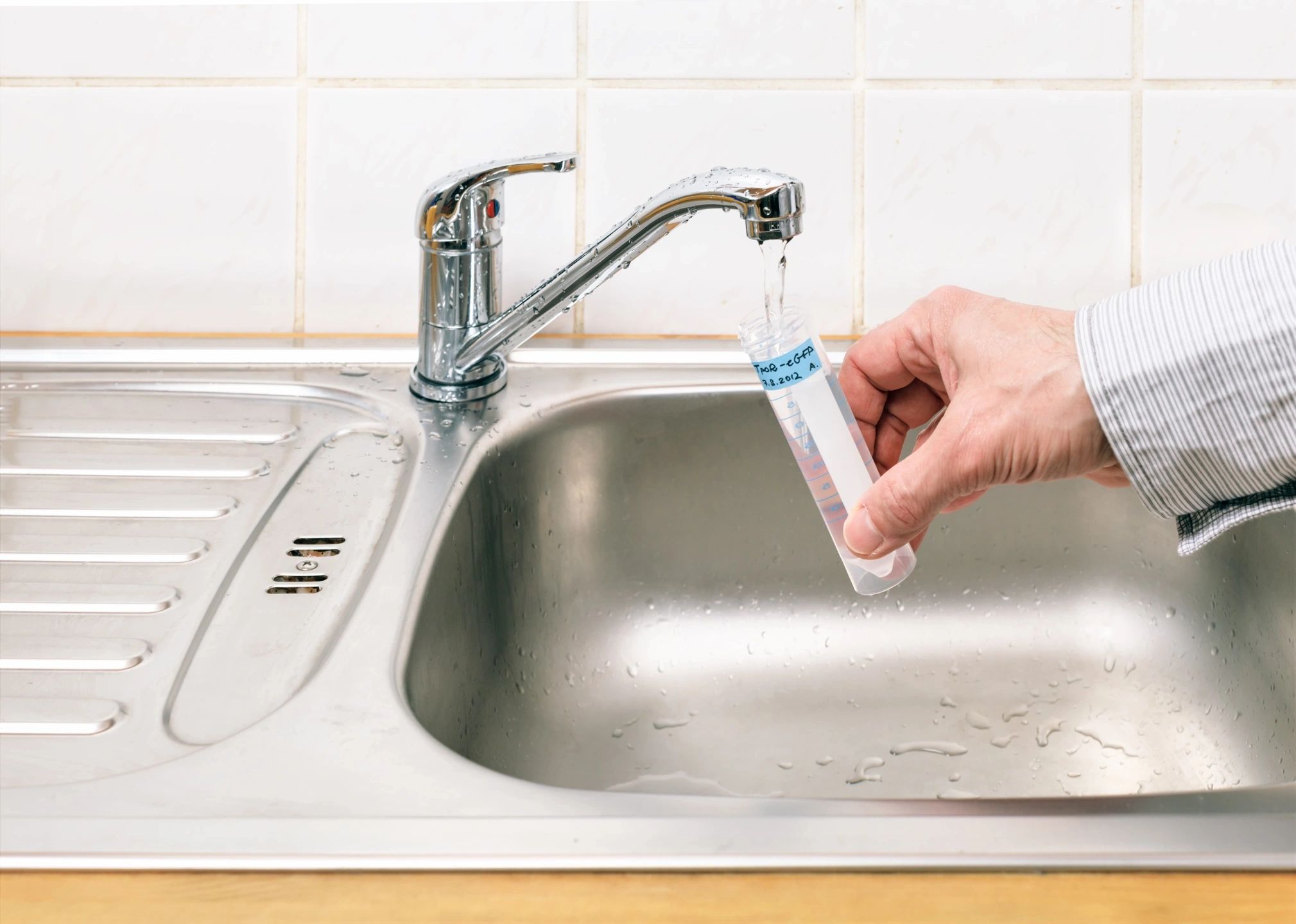
Professional PFAS water testing requires careful sample collection to avoid cross-contamination. Samples must be collected in PFAS-free containers, handled with gloves that don’t contain PFAS, and analyzed using EPA-approved methods (typically EPA Method 533 or 537.1).
The Maine CDC publishes guidance on PFAS testing for drinking water. Results are reported in nanograms per liter (ng/L) or parts per trillion (ppt) — the two terms mean the same thing.
Key thresholds to know:
- Maine’s current interim standard: 20 ppt for the combined sum of six PFAS (PFOA, PFOS, PFHpA, PFNA, PFDA, PFHxS)
- New federal-aligned MCL for PFOA and PFOS: 4 ppt each
- Additional federal MCLs: 10 ppt for PFHxS, PFNA, and HFPO-DA (GenX)
If your results come back above these thresholds, treatment options include granular activated carbon (GAC) filtration, ion exchange resin (IX) systems, and reverse osmosis (RO). The right solution depends on the type and concentration of PFAS present, which is why laboratory analysis is the essential first step.
Why Testing Matters Now — Not Later
The regulatory trajectory in Maine (and nationally) is moving in one direction: tighter limits, broader testing mandates, and greater disclosure requirements. The EPA finalized its first-ever national drinking water standards for PFAS in April 2024, and while the current administration has extended some compliance timelines, the underlying limits remain in place.
For homeowners, the case for testing is straightforward. You can’t treat what you don’t measure. If PFAS are present in your well water above safe levels, early detection gives you the information you need to protect your family — whether that means installing a filtration system, switching to an alternative water source, or making an informed decision about a property purchase.
For landlords, testing is rapidly becoming a legal obligation. For real estate professionals, it’s becoming a standard of care. And for anyone buying a home on well water in Maine, it’s one of the smartest investments you can make before closing.
Sources and Further Reading
- EPA: Our Current Understanding of the Human Health and Environmental Risks of PFAS
- National Institute of Environmental Health Sciences: PFAS
- Maine DEP: PFAS Investigation and Resources
- Maine DEP: PFAS Soil and Groundwater Investigation
- Maine CDC: PFAS and Well Water
- Maine CDC: PFAS in Public Water Systems
- Maine DEP: PFAS in Products Program
- Pierce Atwood: Maine PFAS Tracker
- Maine Morning Star: Bills to Expand PFAS Testing in Private Wells
- Environmental Health Perspectives: PFAS Contamination of Private Wells from a Rural Maine School
- Press Herald: Maine Adopts Tougher Limits on PFAS in Drinking Water
- National Academies: Guidance on PFAS Exposure, Testing, and Clinical Follow-Up